
 役員紹介
役員紹介 お取引業界
お取引業界 採用情報
採用情報 試験サービス

 BGAリボール
 緊急調達
緊急調達 EOL品管理
 余剰在庫買取サービス
 中期的な購買価格分散
 品質管理プロセス
 サプライヤ評価
 取得認証およびメンバーシップ
 コラム
コラム ニュース&イベント
 ブログ
ブログ ビデオ
ビデオ フランチャイズ一覧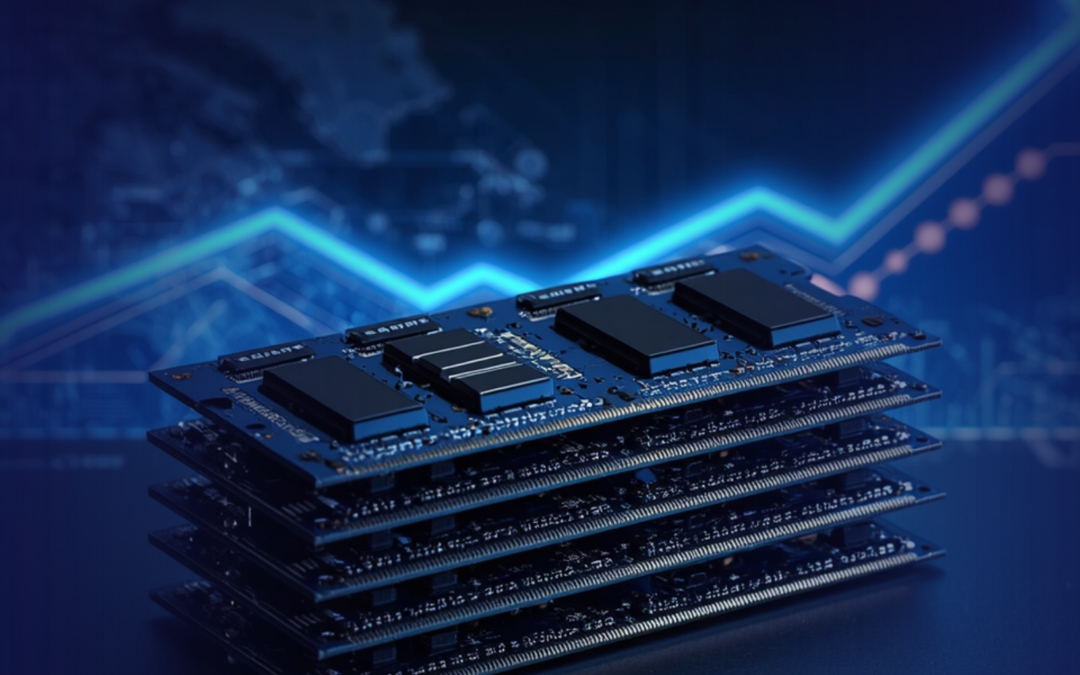
The electronic component market has produced a clear divergence in 2026, and nowhere is it sharper than in memory.
As conditions across the broader supply base continue to tighten, the memory chip shortage now defining the year has pushed DRAM and NAND decisively into allocation, with conventional DRAM contract prices up roughly 90 percent in the first quarter of 2026 alone and major suppliers holding firm on allocation only terms. For procurement and engineering teams, the central question is no longer whether memory will tighten further, but how to source through a constraint that conventional purchasing channels were never built to absorb.
Why this memory chip shortage is different
The temptation is to read current conditions as a continuation of the 2021 and 2022 shortages and to assume they will ease in the same manner, yet the underlying driver is fundamentally different, because this is a structural reallocation of capacity rather than a temporary imbalance. Conventional DRAM contract prices surged 90 to 95 percent in the first quarter of 2026 and are climbing a further 58 to 63 percent in the second, while NAND contract prices are rising 70 to 75 percent quarter over quarter and have begun to outpace DRAM for the first time in the current cycle. The pressure originates inside the fab, where wafer capacity is being redirected toward high bandwidth memory and advanced DRAM nodes to serve the demand of artificial intelligence infrastructure, and every wafer committed to that segment is one that never reaches the commodity DRAM market. Lead times on DDR4 and DDR5 have extended beyond 40 weeks, the major memory makers report order books committed well into 2027, and new fabrication capacity is unlikely to come online in volume before late 2027 or 2028.
What elevates this from an expensive inconvenience to a genuine production risk is the absence of slack across the channel. Inventory that once represented roughly 31 weeks of coverage has fallen to under eight, which removes the cushion that historically absorbed a forecast revision or an unplanned order. When a memory component slips under these conditions, no buffer remains to cover the gap, and the exposure passes directly into every product that depends on memory, from industrial controllers to automotive modules to the data center servers that are fueling the shortage in the first place.
Building a memory procurement strategy that holds
Allocation markets reward preparation, and the organizations that navigate the memory chip shortage most effectively share a consistent set of practices. Several measures stand out as the most reliable means of reducing exposure over the coming quarters.
Current pricing should be treated as a floor rather than a ceiling. The cost pressure traces to capacity decisions that will require several quarters to unwind, which means a budget anchored to present quotes is likely to prove optimistic well before year end. Incorporating a realistic escalation assumption into program costing protects margins and supports more accurate internal forecasting.
Allocation commitments hold value only when they are documented. Verbal assurances and published web pricing offer little protection once a supplier begins rationing, and the components a program cannot proceed without deserve firmer footing. A written commitment that specifies quantities and delivery windows provides a defensible basis for production planning, whereas a quoted lead time remains subject to revision with each supplier notice.
Memory intensive designs warrant long range agreements secured early. When a design depends heavily on memory, the least advantageous moment to begin the supply conversation is the quarter the parts are required. Engaging suppliers on multi quarter agreements ahead of demand, and pre purchasing two to three quarters of coverage where a carrying cost analysis supports it, converts an availability risk into a cost decision that proves far more manageable.
Buffer stock decisions reduce to a straightforward cost comparison. When the cost of holding additional inventory falls below the cost of a line stoppage, building a buffer becomes the rational course. Memory and several categories of passive components are precisely the areas where current conditions favor holding stock, given how rapidly their availability has shifted.
Alternative sourcing channels remain viable when paired with disciplined verification. When franchised distribution cannot fulfill a requirement, the open market and alternative supply networks become essential to maintaining production schedules, and there is nothing inherently risky in using them provided that incoming material is verified. This is where component authentication proves its value, functioning not as a procedural formality but as the safeguard between an expedited purchase and a field failure. Parts sourced through a global sourcing network should undergo laboratory authentication and electrical verification before reaching the production floor, and in high reliability programs that step is not optional.
The memory chip shortage will not resolve on a schedule that planning teams can mark with confidence, and organizations that wait for a return to familiar conditions will spend 2026 responding to disruptions rather than anticipating them. The teams that emerge in the strongest position will accept the current market as the operating reality, build a memory procurement strategy around it, and partner with sourcing organizations capable of reaching supply across multiple regions while standing behind the authenticity of every component they deliver.
Read More: